
Why We Archive (and why DH matters for Guinea)
I vividly remember reading the course description of this class, and I was like I have to be in this class. I was so excited. Finally I can make my vision come to fruition. I have been thinking of doing this project for years, but as always it’s buried in my hundreds of project idea iPhone notes.
I recall more than 3 years ago, when we went back to Guinea as we often do. My sister and I went down a rabbit hole of learning and understanding our family history, and Guinean history in general. We were asking everyone questions. My parents, my uncles, my aunts, any family member we could find, just trying to piece things together. Then my mom introduced us to this man she knew. He was a griot (an oral historian in West African culture, basically the holders of our history).
He looked at us and said, “of course I know your family history.” And he started to tell us little bits here and there, not only about our family but also about Guinea. I had to leave for an internship that was about to start, but my sister stayed. Before I left, I told her we need to record the man, sit with him, and let him tell us all of our family history. Of course, as young children insouciant of the luxury of time, we kept saying we will do it tomorrow. The tomorrow “I will stop by to see tonton(uncle)” became tomorrow I will stop by to say my condolences to tonton’s family.
We unfortunately were never able to record his knowledge, and never found out our missing family history. That was when it hit me. I really felt the burden and power of the proverb: “when an old man dies, a library burns.” That moment stayed with me.
Since then, I have tried to record my grandmothers, digitize any photographs and family archives I could find. I realized how fragile first-hand knowledge and history is. One sickness, one fire, one sudden death, and it can all be gone. And I realized how important it is to preserve and keep those knowledges before they vanish.
So when I think about digital humanities, for me it is exactly this. It is not just about a bunch of documents in a cloud storage. It is a way to preserve memory. It is a way to create tools for Guineans to recompose and hold on to their history. Digital humanities is giving people a way to make sure the libraries do not keep burning, but instead get rebuilt digitally, piece by piece.
I have looked at archives and digital humanities projects before. One that really struck me was Camp Boiro Memorial. It is an online archive created by survivors and families of Guinea’s political prisoners. Going through it, you see names, testimonies, and stories that were silenced for decades. But you also see the gaps. You realize how much is still missing. So many stories are still only living in people’s voices and memories, and they could disappear if no one records them.
That is why we archive. To fight silence. To make sure that the small things, a griot’s story, a grandmother’s memory, a black-and-white photo kept in a drawer are not lost. We archive so that future generations have something to hold on to, something to learn from, and something to argue with.
In this class, I want to explore a few things. First, how to make archives community-first, not extractive. So that Guineans can decide what to share and how, instead of researchers just taking. Second, how to use tools like Whisper or other AI models to transcribe oral histories in Susu, Fulani, and Mandingo, languages that rarely make it into the digital space. Third, how to make archives accessible in places where internet is slow or unstable, so people in Conakry or Kankan or Labé can still use them.
For me archiving is not about freezing the past in a museum box. It is about making history living. It is about allowing people to interact with it, argue with it, and see themselves in it. That is why this class matters to me. It is not just academic. It is the start of something urgent and deeply personal.
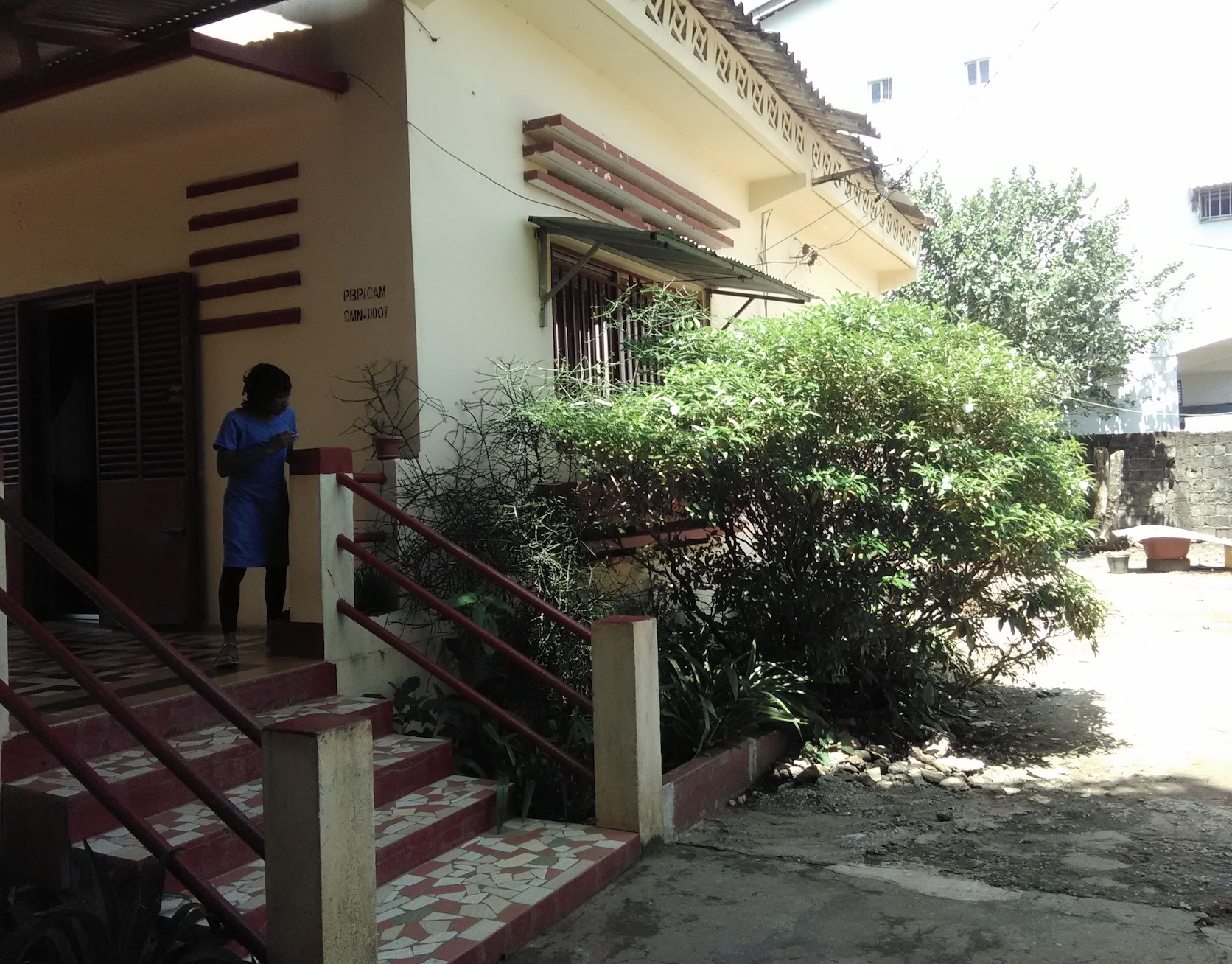
Caption: My grandmother’s house that sadly got destroyed in 2021. The house was a colonial house, and she lived there for more than 30 years. This picture must have been taken in 2016 .